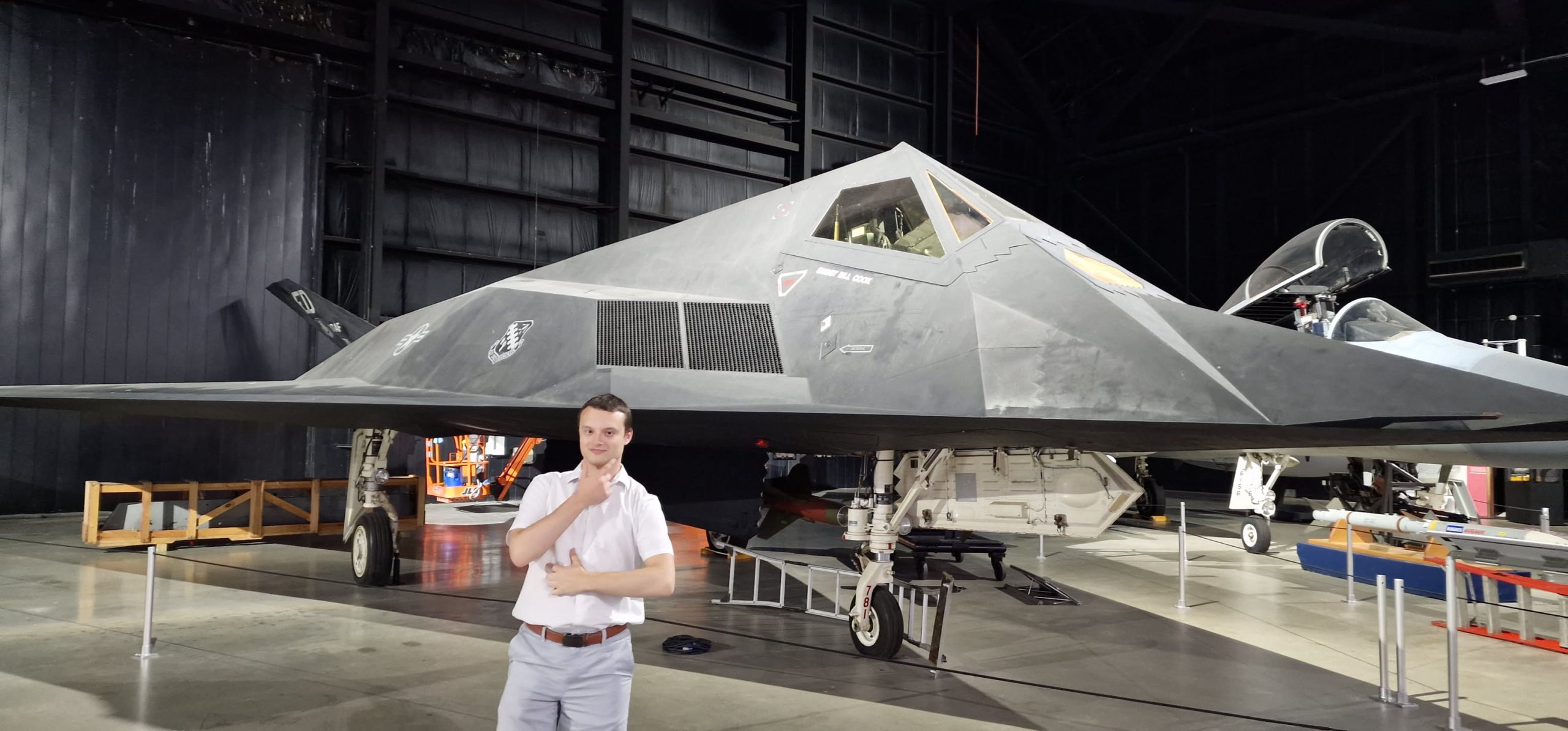
As you can see in the cover photo from my recent pilgrimage to the National Museum of the USAF in Dayton, Ohio, standing next to the F-117 Nighthawk is an uncanny experience. Even parked silently in a hangar, it feels dangerous. It doesn’t look like an airplane; it looks like a shard of obsidian dropped from space, something that shouldn’t be able to fly at all.
Seeing it up close gives you a visceral understanding of why it remained a classified secret for so long. This machine changed the fundamental rules of aerial warfare.
Developed in total secrecy at Lockheed’s legendary “Skunk Works” in the late 70s and early 80s, the F-117 was designed around a single, revolutionary concept: invisibility.
Pilots initially dubbed it the “Hopeless Diamond” because its aerodynamics were atrocious. It was subsonic, it couldn’t turn tightly in a dogfight, and it carried no radar of its own to avoid emitting electronic signals. It relied entirely on its bizarre, faceted shape, coated in classified radar-absorbent materials, to scatter radar waves away from their source. It was a ninja: slow, deliberate, and utterly silent to electronic eyes.
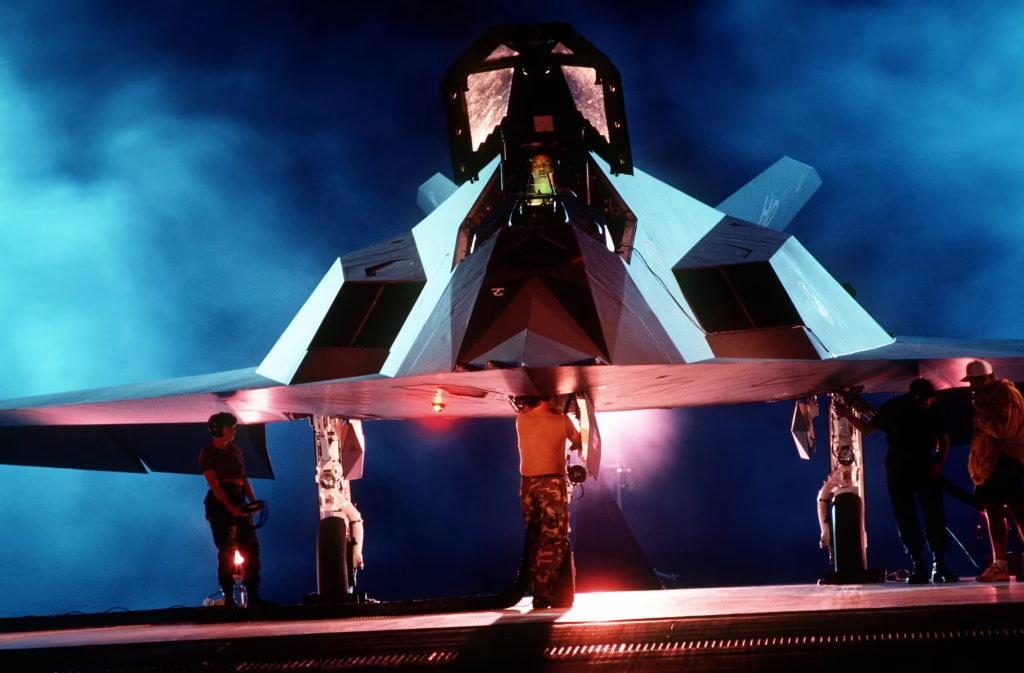
For years, it was a ghost. During the 1991 Gulf War, the F-117 cemented its legend. It flew over 1,200 sorties into the heart of Baghdad’s most heavily defended airspace without a single loss. It created an aura of absolute invincibility, delivering laser-guided bombs down ventilation shafts while Iraqi radar screens showed nothing but empty sky.
However, on March 27, 1999, during NATO operations over Yugoslavia, that aura was shattered.
An F-117, callsign “Vega 31,” piloted by Lt. Col. Dale Zelko, was shot down near Belgrade. The world was stunned. How could an “invisible” jet be destroyed by a Soviet-era SA-3 missile system?
It wasn’t advanced technology that beat the Nighthawk, but cunning tactics. The Serbian air defense crew, led by Colonel Zoltán Dani, knew NATO flew predictable routes. They utilized older, long-wavelength radars that could faintly detect the disturbance a stealth aircraft creates.
Crucially, they timed their ambush perfectly. They switched their tracking radar on for just seconds exactly when the F-117 opened its bomb bay doors. For those few seconds, the jet’s interior was exposed, ruining its stealth geometry and making it light up on radar screens like a Christmas tree.
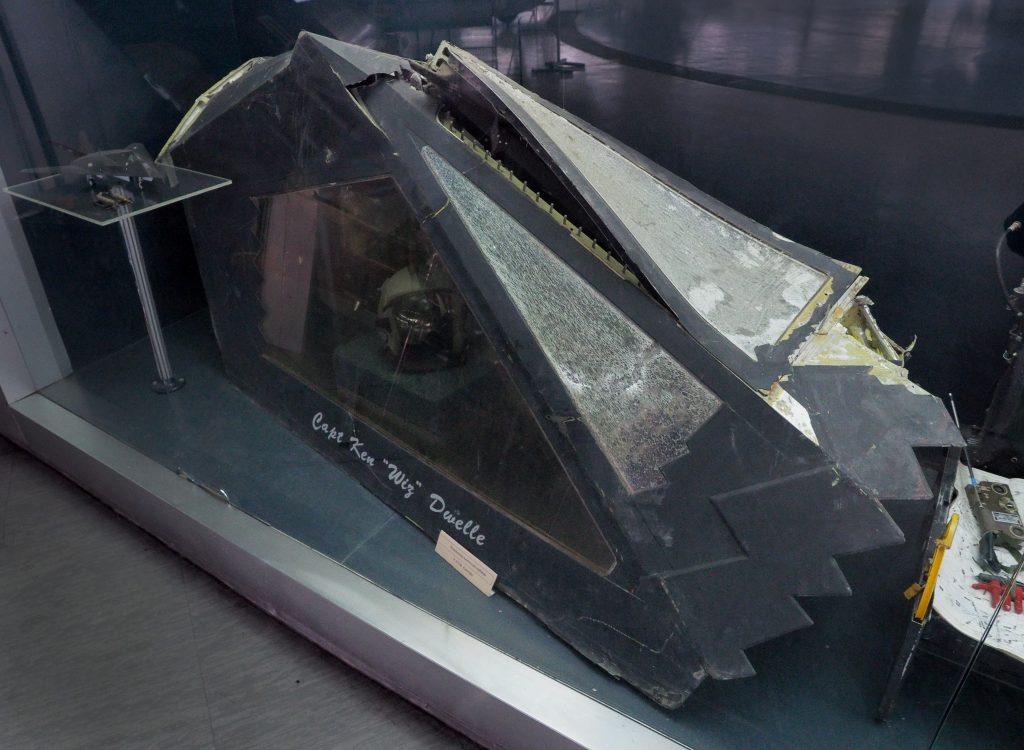
The pilot was successfully rescued, but the wreckage was a propaganda coup for Serbia and an intelligence goldmine for America’s adversaries. The incident proved a vital lesson that still holds true today: stealth is not a magic invisibility cloak; it is merely a massive advantage that can be overcome by a determined, patient, and clever enemy.


Leave a Reply